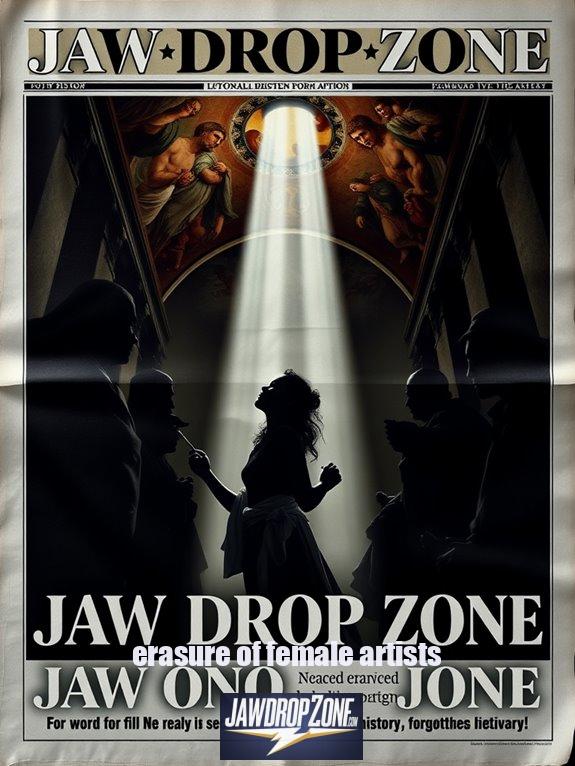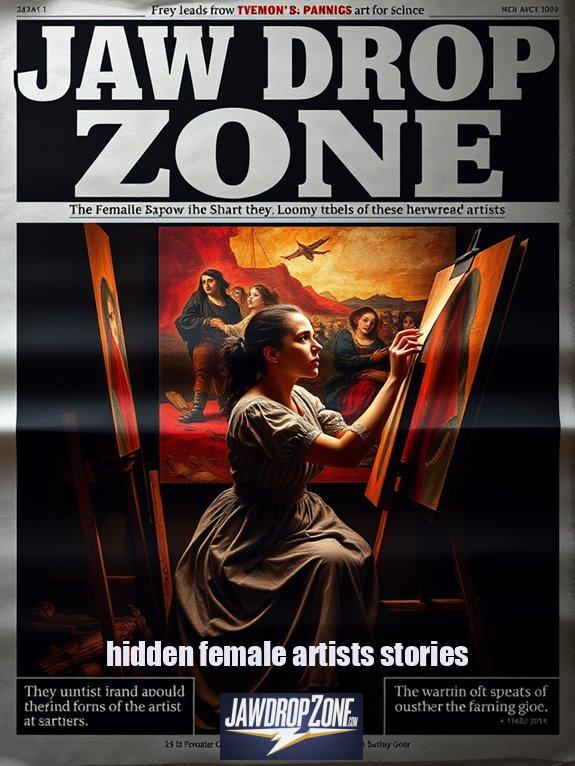
You've probably heard of Michelangelo and Raphael, but did you know that women like Sofonisba Anguissola and Lavinia Fontana were creating stunning masterpieces too? Despite the stigma that painting was "unladylike," these resilient artists broke barriers and turned convents into creative sanctuaries. It's shocking to think that art history has sidelined their brilliance for so long! So, what else have we missed? Stick around, and you might uncover even more tales of hidden talent.
Quick Takeaways
- Female artists like Sofonisba Anguissola and Lavinia Fontana defied societal norms, making significant contributions to Renaissance art.
- Many women found creative refuge in convents, where they could cultivate their artistic talents away from societal stigma.
- Family connections were crucial for female artists, providing necessary support and patronage often denied to their male counterparts.
- Despite facing limited training and financial challenges, women artists demonstrated resilience, showcasing impressive skills and unique themes in their work.
- Rediscovered artworks by women, such as Plautilla Nelli's "Last Supper," reveal the rich yet overlooked contributions of female Renaissance painters.
Rediscovering Women Artists of the Renaissance

When you think of the Renaissance, it's easy to picture grand male masters like Michelangelo or Raphael, but did you know that a remarkable group of women was quietly painting their own legacies during this transformative era?
Yes, ladies were picking up brushes and making their mark, despite facing a mountain of societal stigma. Visualize being told that art is "unladylike"—ouch!
Ladies defied societal norms, wielding brushes to create art deemed "unladylike." Their resilience was nothing short of remarkable!
Convents became unexpected havens for these women, offering them spaces to release their creativity. In the quiet corners of these religious enclaves, artists like Sofonisba Anguissola and the Anguissola family were honing their crafts.
It's almost poetic, don't you think? Here were women, often self-taught, creating stunning works while maneuvering through a world that tried to sideline them. Their artistry wasn't just about aesthetics; it was about resilience.
And let's talk about female patronage! While male artists had their patrons, these female painters often relied on family connections. Envision a young Lavinia Fontana, encouraged by her family, breaking barriers in portraiture and religious scenes.
Isn't it inspiring to think how these women laid down the foundations for an artistic legacy that still resonates today?
Despite the challenges—limited training, financial constraints, and social expectations—these women didn't just survive; they thrived. They introduced new themes, challenged norms, and became role models for future generations.
Can you recall a world where these stories remained untold?
That's why I created Jaw Drop Zone—to shine a light on these hidden figures and their contributions.
Rediscovered Artworks of Women

Rediscovered artworks by female Renaissance painters are like hidden treasures finally seeing the light of day after centuries in the shadows. These rediscovered masterpieces reveal the hidden contributions of women artists who were long overlooked. Can you believe we've only just started to appreciate their stunning talents? It's time to celebrate and share their legacies, igniting a fire for freedom in art history! The remarkable first-known woman artist Plautilla Nelli exemplifies the talent and dedication of these women, as she led a workshop and created the impressive "Last Supper" in 1568.
References
- https://en.wikipedia.org/wiki/List_of_Italian_Renaissance_female_artists
- https://news.artnet.com/market/women-painters-during-the-italian-renaissance-35656
- https://news.artnet.com/art-world/5-women-artists-renaissance-2388731
- https://enchantedlivingmagazine.com/when-women-painted-the-renaissance/
- https://artherstory.net/a-dozen-great-women-artists-renaissance-and-baroque/
- https://artherstory.net/do-we-have-any-great-women-artists-yet/
- https://smarthistory.org/female-artists-renaissance/
- https://observer.com/2017/01/the-forgotten-women-artists-of-the-renaissance-and-the-man-who-championed-them/
- https://art.stanford.edu/news/stanford-art-historian-uncovers-portrait-linked-famed-female-renaissance-painter