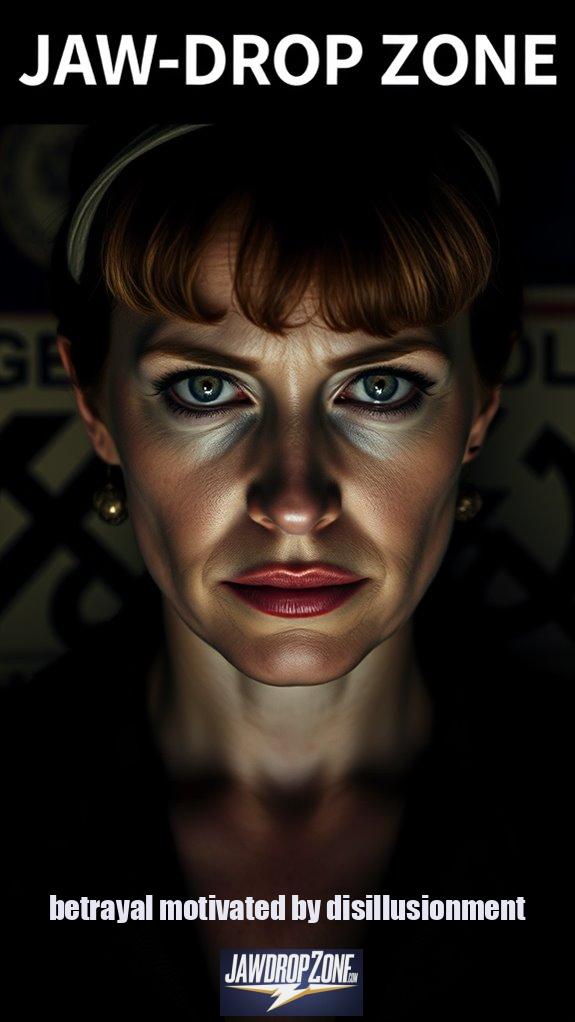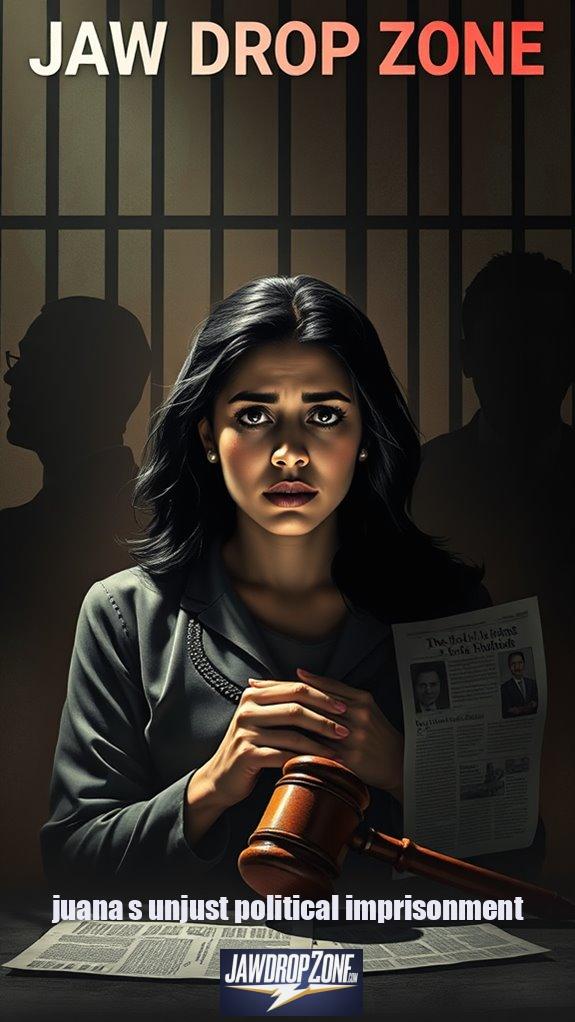
Juana’s imprisonment is a dark tale where love morphed into betrayal—can you envision being a pawn in a family’s power struggle? Allegations of her insanity became the perfect facade for the Habsburgs and Trastámaras to manipulate Spain’s future. Locked away and labeled mad, she lost her voice while her family’s ambitions unraveled. It’s like a soap opera, only way more tragic. Curious about how these historical political games reflect today’s struggles for power and agency? Keep exploring!
Quick Takeaways
- Juana’s imprisonment served as a strategic political maneuver by powerful families to maintain control over the Spanish monarchy and suppress her authority.
- Allegations of “madness” were used to delegitimize Juana, framing her as a tool for political manipulation rather than a legitimate ruler.
- Juana’s confinement mirrored the ambitions of the Habsburgs and Trastámaras, who sought alliances through calculated marriages while sacrificing her autonomy.
- Prolonged isolation and trauma strained Juana’s mental health, reinforcing the narrative of her insanity that facilitated her continued imprisonment.
- Her story highlights historical patterns of women’s roles being reduced to pawns in political strategies, illustrating enduring societal dynamics regarding female agency.
Family Ambitions and Power Struggles

While it may seem like a fairy tale, Juana’s life was more akin to a game of chess, where every move was dictated by powerful family ambitions and brutal power struggles.
Can you envision a life where your destiny rests in the hands of royal strategists? Juana became a pawn in a grand game—the infamous Habsburgs and Trastámaras manipulated her very existence through calculated marriages. Her ability to navigate these treacherous waters parallels that of Queen Njinga’s diplomatic mastery in negotiating with foreign powers.
She married Philip, Duke of Burgundy, not for love, but to secure Spain’s grip against France. Juana’s marriage was part of a political alliance that aimed to strengthen Spain’s position in Europe.
But wait—was she truly a queen, or just a political plaything?
With every alliance came a price. Isabella feared the reaction to a foreign king, while Ferdinand saw Juana not as a ruler, but a vessel for his own ambitions.
This is the twisted tale I explore on Jaw Drop Zone, where history’s drama unfolds.
Are you ready for more shocking revelations?
Political Repercussions of Her Confinement

Although many view imprisonment as merely a punitive measure, Juana’s confinement brings to light the chilling political machinations at play behind closed doors.
Did you know allegations of insanity became a weapon to delegitimize her? This “locura de amor” narrative wasn’t just gossip; it carved a path for powerful families to tighten their grip, keeping her authority in check.
In the shadows, her image was manipulated to maintain a facade of stability for the Spanish monarchy.
Envision this: while they flourished, Juana’s fate became fodder for intrigue rather than truth. It’s a cruel irony—her imprisonment served economic interests linked to the corrections industry, fueling policies that prioritize control over compassion. Interestingly, her astonishing escape was not merely a narrative of survival, but a pivotal moment that illuminated the political tensions surrounding her reign.
Isn’t it wild how one individual’s confinement can mirror today’s struggles with mass incarceration?
I created Jaw Drop Zone to shed light on these absurdities. Juana’s story is a cautionary tale we should all heed.
Juana’s Secretive Confinement Reveal

Juana la Loca’s confinement—one could say it reads like a twisted fairy tale, if fairy tales included dungeons and family betrayals.
Imagine this: a once-royal figure, locked away in the fortress of Tordesillas, her own family pulling the strings.
They claimed she was “mad,” using her alleged mental instability to silence her. Ever wonder why? It conveniently aligned with their quest for power.
With loyal custodians replacing her servants, Juana faced isolation that would make anyone question their sanity.
Did she truly suffer from a mental illness, or was it just the result of prolonged trauma? She was trapped in a world devoid of freedom for nearly 50 years.
Her story isn’t just history; it’s a revelation of how family loyalty can morph into treachery.
This isn’t just a tale; it’s why I created Jaw Drop Zone—because the truth often sits behind locked doors, waiting for someone to pry it open.
References
- https://www.encyclopedia.com/women/encyclopedias-almanacs-transcripts-and-maps/juana-la-loca-1479-1555
- https://portal.cops.usdoj.gov/resourcecenter/content.ashx/cops-w0047-pub.pdf
- https://www.cambridge.org/core/journals/the-british-journal-of-psychiatry/article/juana-la-locajoanna-the-mad-14791555-queen-of-castile-and-of-aragon-and-necrophiliac-psychiatry-in-history/40ACAC3CDE1F1F3526AC19997BA4C62C
- https://en.wikipedia.org/wiki/Joanna_of_Castile
- https://uneasy-lies-the-crown.com/2020/10/02/livin-la-juana-loca/
- https://www.townandcountrymag.com/society/tradition/a27786471/catherine-of-aragon-sister-juana-la-loca-spanish-princess/
- http://www.dalniente.com/s/Thoughts-on-Juana-of-Castile-for-Eliza-Brown.pdf
- http://www.historyisnowmagazine.com/blog/2018/10/7/was-joanna-of-castile-truly-mad-or-a-pawn-for-the-men-in-her-family
- https://hekint.org/2021/08/24/queen-juana-the-mad-or-the-betrayed/
- https://www.the-independent.com/news/world/europe/juana-rivas-jailed-woman-hiding-sons-spain-escape-abusive-ex-partner-granada-court-a8469501.html