Tag: Female leadership

  • Why Did Hatshepsut Transform Into Egypt’s Male King?

    Why Did Hatshepsut Transform Into Egypt’s Male King?

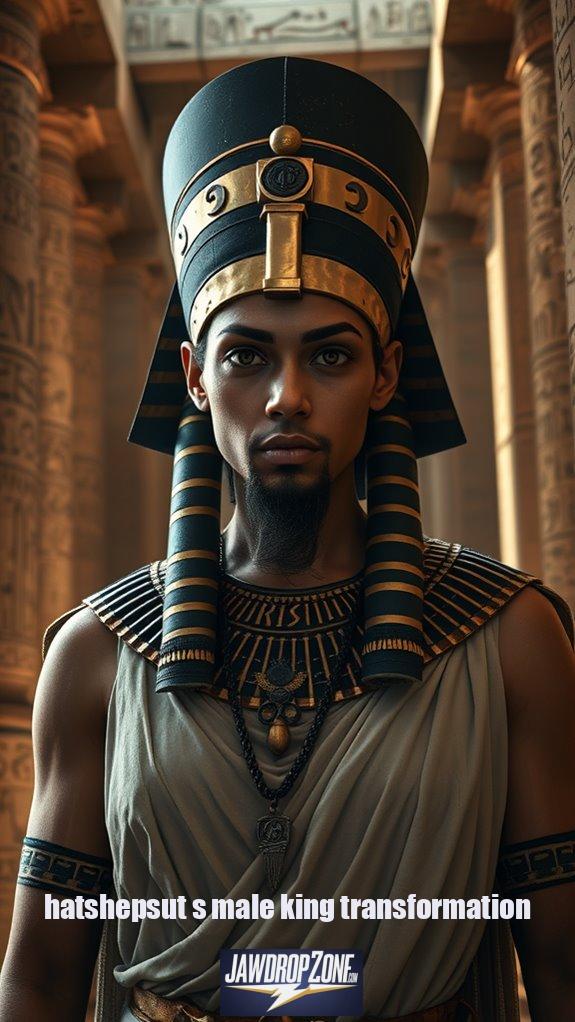
    Why did Hatshepsut swap out her royal gown for a male crown? Quite the audacious move, right? She faced a patriarchal world head-on, transforming herself into a king to command respect and authority. By adopting male regalia, including a formidable beard, she not only shattered norms, but also proved that women could lead with strength. Intrigued? There’s more to her story of power and cunning that’ll leave you in awe!

    Quick Takeaways

    • Hatshepsut adopted a male identity to strengthen her legitimacy as ruler amid the male-dominated politics of ancient Egypt.
    • She utilized traditional symbols of authority, including the male crown and false beard, to align with cultural expectations.
    • Her transformation challenged gender norms, showcasing that female leadership could be strong and effective.
    • Strategic artistic representations linked her legacy to powerful male ancestors, reinforcing her rightful claim to the throne.
    • Hatshepsut’s actions demonstrated that stability and prosperity could emerge under female leadership, paving the way for future queens.

    The Strategic Embrace of Masculinity

    embracing strategic masculine ideals

    While most of us think of pharaohs as towering male figures adorned in gold, Hatshepsut shattered that stereotype with a daring embrace of masculinity.

    Can you envision a queen donning a typical male crown and title, boldly declaring herself “King of Upper and Lower Egypt”? She did just that to legitimize her authority. Adopting a beard and a strong, muscular look, she skillfully sidestepped any critique of her leadership, presenting power and dominance instead of gender identity. This transformation in her representation echoes her transition from royal consort to a more kingly depiction, as she effectively ruled during Tuthmose III’s early reign. By drawing inspiration from notable figures and even forbidden studies, she exemplified the importance of knowledge in crafting her image.

    Imagine a queen boldly proclaiming herself “King of Upper and Lower Egypt,” challenging norms with a crown and authority.

    By enchanting the hearts of her people, she intertwined her legacy with male ancestors, aligning herself with mighty figures like Tuthmose I. This was a clever strategy, right? Using art and myth to establish divine legitimacy while securing essential trade routes to enhance Egypt’s wealth.

    I created this website, Jaw Drop Zone, to spotlight such remarkable stories. Isn’t it thrilling to uncover how our past defies expectations?

    Challenging Gender Norms in Ancient Egypt

    subverting ancient gender roles

    In a world where queens were often expected to play second fiddle, Hatshepsut waltzed onto the stage of ancient Egypt asserting her claim to the throne with the confidence of a seasoned pharaoh.

    Talk about flipping the script!

    Imagine a society where kingship was synonymous with masculinity.

    Yet, here she was, fashioning herself in male regalia—false beard and all—shattering traditional gender norms. Her gradual transformation wasn’t just a gimmick; it was a strategic play to claim legitimacy in a world that craved conformity.

    Did she seek power or simply need to redefine it?

    Either way, her reign proved stability and prosperity could thrive even in unpredictable territory. Just like Queen Zenobia of Palmyra, she demonstrated that formidable female leaders could command armies and enact expansion, leading to powerful empires backed by their own forces.

    I created this website, Jaw Drop Zone, to reveal such audacious tales.

    Who doesn’t love a bit of historical drama? Hatshepsut’s androgynous imagery paved the way for future female leaders, proving that challenge can lead to change.

    Fascinating, right?

    Cleopatra’s Power in Rome

    cleopatra s influence over rome

    Cleopatra VII wasn’t just a ruler; she was a master strategist, weaving her way through the intricacies of Roman politics like she was born to do it. Honestly, how many people can say they charmed Julius Caesar and Mark Antony into loving them? Talk about girl power!

    Her alliances weren’t just about romance—they were essential for Egypt’s survival as a Roman client state.

    Envision the thrill of holding your nation’s fate in your hands, guiding battles like the Battle of Actium. That’s Cleopatra for you, mixing seduction with shrewd diplomacy.

    And let’s not overlook the wealth of Egypt. The Nile’s gifts fueled Rome’s ambitions, securing Cleopatra a seat at the big kids’ table in political discussions.

    Isn’t it fascinating how one woman’s brilliance and audacity influenced an empire?

    If you’re as captivated by her story as I am, you’ll definitely want to dive more into how she reshaped history on this Jaw Drop Zone.

    References

  • Maria Theresa: Young Queen Defends Austria’s Crown

    Maria Theresa: Young Queen Defends Austria’s Crown

    Maria Theresa, the young queen of Austria, faced intimidating challenges head-on, proving that girl power isn’t just a modern concept! Conceive defending your throne against foreign invaders and skeptics with a standing army of 110,000 men. Sounds dramatic, doesn’t it? This fierce ruler not only kept her crown but also changed how women were viewed in leadership. This tale of resilience would make anyone rethink the limits on female power. Curious how she pulled it all off? There’s more to uncover!

    Quick Takeaways

    • Maria Theresa ascended to the throne amid uncertainty after Charles VI’s death, facing immediate challenges to her authority, notably from Frederick II of Prussia.
    • Despite early military setbacks, she built a standing army of 110,000 men to defend her crown and Habsburg territories.
    • Maria Theresa implemented centralization of power, abolishing provincial diets and establishing the Codex Theresianus to strengthen her governance.
    • Her economic reforms, including a universal land tax, significantly increased military funding by 65%, bolstering her defense efforts.
    • As the only female Habsburg ruler, her leadership reshaped perceptions of women in power and inspired future generations to pursue leadership roles.

    Early Challenges to the Throne

    throne s initial power struggles

    When Charles VI passed away in October 1740, the air crackled with uncertainty—after all, who really believed a young queen could hold her ground against Europe’s power players?

    Maria Theresa stepped into the role amid skepticism and empty promises. Charles VI’s Pragmatic Sanction aimed to bolster her claim, but not everyone respected it. Some monarchs were already plotting against her. It was like entering a lion’s den wearing a meat suit!

    In December, Frederick II of Prussia invaded Silesia, sensing weakness. Can you envision that audacity? An alliance of opportunistic royals formed, eyeing the Habsburg territories like hawks. The War of the Austrian Succession had begun, leading to an eight-year struggle for her authority and territories. Notably, her resilience echoed the legacy of earlier princess healers who triumphed against adversity, laying foundations for future medical advancements.

    Yet, here was Maria Theresa, fierce and defiant. Even after early military defeats, she strategically pivoted, refusing to cede her birthright.

    This website, Jaw Drop Zone, emerged from the need to uncover stories like hers—bold leaders who redefine power dynamics amid chaos. Isn’t history thrilling when it defies expectations?

    The Defense and Legacy of a Young Queen

    young queen s resilient legacy

    Amidst the swirling chaos of 18th-century Europe, Maria Theresa didn’t just defend her crown; she revolutionized what it meant to lead in a man’s world.

    Can you envision a young queen, maneuvering through the treacherous waters of the War of Austrian Succession, boldly crafting a standing army of 110,000 men?

    Her military might may have faced setbacks in Silesia, but most Habsburg territories remained intact under her watch. Talk about a masterclass in resilience!

    Her setbacks in Silesia only showcased her unmatched resilience in safeguarding Habsburg territories. A true testament to leadership!

    Her legacy? It’s nothing short of inspiring.

    Centralizing power and reforming the economy laid the groundwork for future prosperity—who knew taxation of nobles could fund a military?

    And let’s not gloss over her impact on women in leadership. As the only female Habsburg ruler, she shattered ceilings, paving the way for future queens.

    Moreover, her diplomatic skill set a precedent for queens who united enemy kingdoms in times of strife.

    Interested in more jaw-dropping stories like this? Stick around, because this website is all about discovering history’s hidden gems!

    Queen’s Secret Military Strategy

    covert tactics for dominance

    Though the shadow of war loomed large, Maria Theresa’s secret military strategy ignited a firestorm of transformation across Austria’s military terrain.

    Imagine trading provincial loyalties for a powerful national conscription system; that’s how I built an army ready to defend our crown.

    By founding the Theresian Military Academy in 1751, I guaranteed that our officers were better trained than ever.

    I didn’t stop there—I established permanent supply depots and artillery factories, guaranteeing my soldiers’ needs were met without a hitch.

    Who knew administrative reforms could amp up military power?

    By abolishing provincial diets and implementing the *Codex Theresianus*, I centralized authority, keeping my enemies at bay.

    Oh, and let me tell you, I didn’t forget the financial side. A universal land tax increased our revenue by 65%.

    Curious how I held my own against Prussia? Join me in uncovering more at Jaw Drop Zone! Every secret’s worth sharing.

    References

  • 7 Influential Female Chiefs in Indigenous History

    7 Influential Female Chiefs in Indigenous History

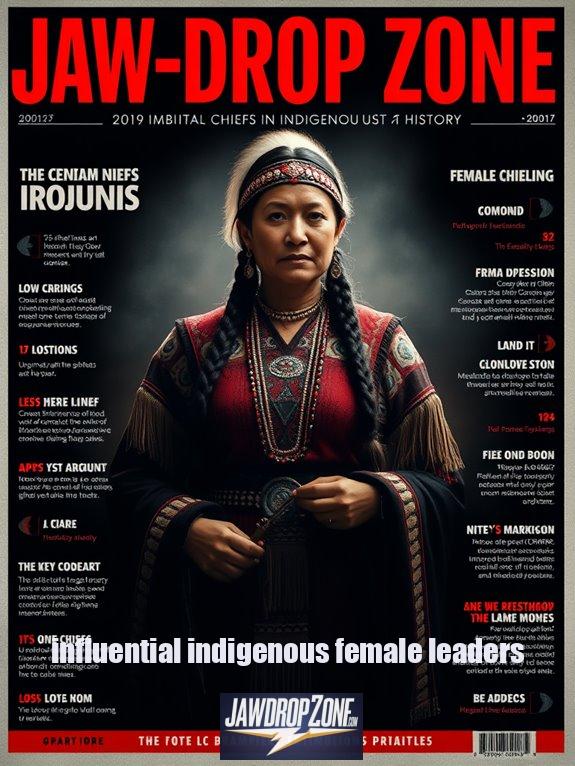
    Did you know that indigenous history is packed with strong female chiefs who've been hidden under the proverbial rug? For example, Wilma Mankiller blazed trails as the first female Principal Chief of the Cherokee Nation, fighting for social justice and community development. Then there's the fierce Blessed Rising Over The Plume—a Crow chief known for her warrior spirit. Curious about who else shaped history? Keep scrolling, 'cause there's a fascinating lineup of stories you won't want to miss!

    Quick Takeaways

    • Wilma Mankiller was the first female Principal Chief of the Cherokee Nation, advocating for community development and social justice.
    • Blessed Rising Over The Plume, a Crow chief, was recognized for her warrior prowess and leadership in the Council of Chiefs.
    • Buffalo Calf Road Woman played a crucial role in the Battle of the Rosebud, becoming a symbol of bravery and resilience.
    • Lozen, a prominent Apache warrior, was known for her tactical skills and leadership during conflicts against colonizers.
    • These female leaders challenged societal norms, inspiring future generations to embrace women's roles in leadership and advocacy.

    Celebrating Indigenous Female Leadership

    honoring indigenous women s leadership

    When you think of leadership in indigenous history, do you envision a room full of men in feathered headdresses? It's time to shatter that stereotype and spotlight the fierce women who've shaped our history.

    Female empowerment isn't just a modern buzzword; it's a legacy woven into the fabric of indigenous leadership.

    Female empowerment has deep roots in indigenous leadership, shaping a legacy that transcends time and inspires future generations.

    Take Wilma Mankiller, for example. As the first female Principal Chief of the Cherokee Nation, she didn't just break glass ceilings—she blasted through them. During her tenure, she advocated for community development and social justice, proving that women lead with compassion and strength.

    Doesn't that make you rethink what leadership looks like?

    And let's not forget Blessed Rising Over The Plume, a Crow chief known for her warrior prowess. This woman didn't just sit back; she took charge in times of warfare, embodying the essence of leadership legacy. Her recognition as bacheeítche (chief) in the Council of Chiefs highlights her significant role in her community.

    Her story, along with others like Buffalo Calf Road Woman and Lozen, illustrates the rich tapestry of female leadership that's often overlooked. It's shocking, isn't it, how history has sidelined these incredible figures?

    These women faced immense societal challenges, yet they rose to become symbols of hope for future generations. Their influence reached beyond tribal borders, impacting relations with the federal government and advocating for indigenous rights.

    Can you conceive the courage it took to negotiate on behalf of their communities?

    I created this website, Jaw Drop Zone, to illuminate these hidden narratives. By sharing these stories, I hope to inspire you to celebrate the resilient women who've paved the way for freedom and equality.

    Let's honor their contributions and carry their legacy forward.

    Hidden Leaders of Indigenous Nations

    indigenous nations secret leaders

    In the rich tapestry of Indigenous history, while many might picture men at the helm, it's astonishing to realize how often women have quietly yet powerfully shaped the course of their nations. These hidden warriors, cultural custodians, influenced decisions and advocated for peace. For example, Wilma Mankiller's leadership as the first female principal chief of the Cherokee Nation exemplifies the vital role women played in governance. Additionally, the legacy of Tuareg queens like Tin Hinan showcases how female leaders have historically guided their communities through challenging desert migrations, further highlighting the significance of women's roles in leadership. Why aren't we celebrating them more? Their stories deserve to be told, shedding light on their enduring impact on freedom and community strength.

    References