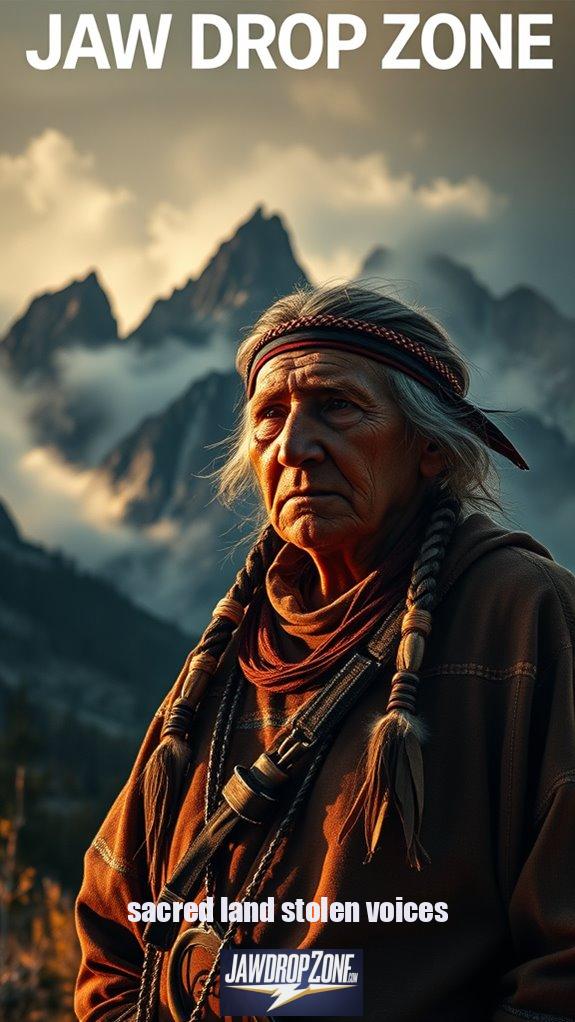
The Black Hills, or Paha Sapa, whisper stories of sacredness and sorrow, a heartland stolen. Did you know over 12,000 years of Native American spirituality hangs in balance? While tourism rakes in a whopping $100 million, Indigenous communities still grapple with poverty. It’s pretty ironic, right? Lawsuits can’t heal the land. I created Jaw Drop Zone to amplify these silent screams, capturing the truth many choose to ignore. Stick around – I promise there’s more to uncover!
Quick Takeaways
- The Black Hills, or Paha Sapa, are sacred to over 50 Indigenous tribes, symbolizing spiritual connection and cultural identity.
- Historical injustices, including broken treaties, have led to the ongoing struggle for the return of this sacred land to its rightful Indigenous stewards.
- Modern exploitation through mining and logging threatens sacred sites, generating profit while leaving Indigenous communities impoverished and marginalized.
- Recognition of the Black Hills as living histories is essential; they embody the collective memory and spiritual heritage of Indigenous peoples.
- Silence regarding these issues is no longer acceptable; active support for land reclamation efforts is necessary to address historical and ongoing injustices.
The Sacred Story of the Black Hills

When you reflect on sacred lands, does a specific visual come to mind? Perhaps stunning mountains glistening under a perfect blue sky, or maybe a place filled with rich history, where the voices of the past still echo in the wind?
Welcome to the Black Hills, or Paha Sapa, the “heart of everything that is” for over 50 Native American tribes, and the epicenter of spiritual significance for the Lakota, Dakota, and Nakota. This land, sacred for more than 12,000 years, holds stories and ceremonies that run deep within its very soil.
Now envision this: the Black Hills boast more than 20 sacred sites, including the revered Harney Peak and the spiritually charged Wind Cave. These aren’t just tourist attractions; they’re cultural powerhouses where vision quests and spiritual journeys are born. Furthermore, the historical context of these lands shows that they have been a site of royal tolerance of minority faiths, preserving cultural practices against oppression.
It’s a land where spirituality can’t be processed like a commodity in a factory; it’s priceless, and even if you wanted to “buy” it, as the Lakota say, you can’t. The land connects celestial alignments and ancient stories—like when White Buffalo Calf Woman introduced the sacred pipe—a moment that shaped the very essence of Lakota culture.
But let’s get real—it’s not all serene spirituality here. The impact of modern greed looms large, with mining and logging wreaking havoc on this sacred ground. Envision the uproar when you realize that despite generating over $100 million annually from tourism, many nearby Indigenous communities still face the brutality of poverty.
So, who’s profiting? It seems pretty clear.
Here’s the kicker: the U.S. Supreme Court has recognized violations of treaties regarding the Black Hills, yet the Lakota refuse financial settlements. They want the land back, not some pocket change that can’t replace their cultural heritage. This ongoing dispute reflects the land ownership issues stemming from treaties that have been broken and ignored over the years.
Isn’t that a powerful statement? It’s a conscious choice to prioritize preservation over profit, and it challenges us to contemplate: What’re we willing to sacrifice for the sake of connection and respect?
So why did I create this website, Jaw Drop Zone? Because stories like these deserve a spotlight.
It’s critical for us to grasp the weight of this narrative firmly. The Black Hills aren’t just landmarks; they’re living histories, begging for acknowledgment, not only from the Indigenous tribes but from all of us.
Now that you know, what’ll you do with this knowledge? Silence is no longer an option.
Battles for Black Hills’ Sovereignty

It’s not just history; it’s a tragedy, and I can’t help but wonder—what would you do if your sacred land was stripped away, one claim at a time?
The battles for Black Hills’ sovereignty are ongoing, filled with sorrow and resistance.
- Treaty Violations: The U.S. didn’t keep its promise to protect these grounds, a colossal betrayal.
- The Battle of Little Bighorn: Picture a decisive moment where Lakota courage clashed with military might, turning public sentiment against them.
- Fragmented Reservations: Forced relocations stripped away not just land, but identity.
As I explore this profound injustice on my site, Jaw Drop Zone, I’m curious—how can we turn the tide and reclaim what’s truly sacred?
References
- https://www.hcn.org/issues/53-1/indigenous-affairs-social-justice-the-battle-for-the-black-hills/
- https://invocationsiu.wordpress.com/2018/06/01/the-sacred-black-hills-exploring-geopiety-in-plains-indian-folklore/
- https://pluralism.org/sacred-lands-and-treaty-rights-the-black-hills
- https://assets.aclu.org/live/uploads/2023/10/9.12.23-ICCPR-Shadow-Report-Desecration-of-the-Black-Hills.pdf
- https://sacredland.org/black-hills-united-states/
- https://www.nps.gov/articles/000/fighting-for-the-black-hills-understanding-indigenous-perspectives-on-the-great-sioux-war-of-1876-1877.htm
- https://lawandinequality.org/wp-content/uploads/2020/12/16_3Law_Ineq2871985.pdf
- https://en.wikipedia.org/wiki/Seizure_of_the_Black_Hills
- https://dcc.newberry.org/?p=14391


