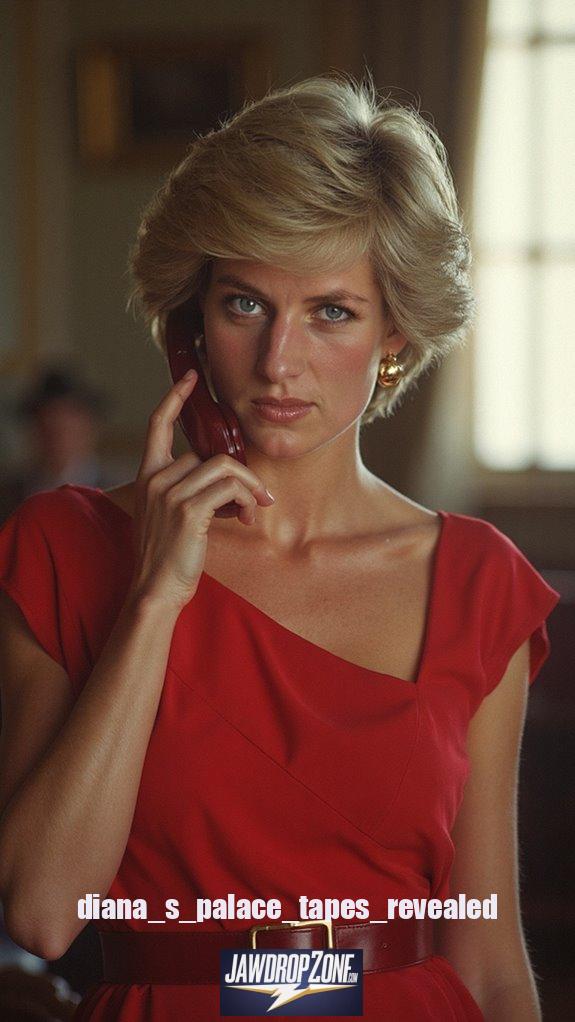
Princess Diana’s palace tapes reveal seven key revelations into her troubled life. First, she expressed deep unhappiness and betrayal from Charles’s affair with Camilla. Second, she battled bulimia nervosa amid royal pressures. Third, Diana shared shocking suicide attempts and self-harm as cries for help. Fourth, Charles’s disappointment over Harry’s birth fueled her pain. Fifth, their marriage lacked intimacy and love. Sixth, she sought the Queen’s support in vain. Seventh, she fell deeply for her bodyguard, finding emotional refuge. These stories highlight her resilience, with more layers waiting to emerge.
Diana’s Deep Unhappiness and Betrayal in the Royal Family

Princess Diana’s tapes uncover her deep unhappiness and sense of betrayal within the royal family. Her betrayal feelings stemmed from Charles rekindling his relationship with Camilla Parker Bowles early in their marriage, which he dismissed outright.
Charles even stated he’d refuse to be the only Prince of Wales without a mistress, deepening her pain. Moreover, he expressed disappointment at Harry’s birth, wishing for a girl, which added to her distress. Diana’s emotional isolation was profound; she felt like a prisoner in Buckingham Palace, describing its “dead energy” and lacking support from Charles and the Palace press office.
Charles declared he wouldn’t be the only Prince without a mistress, intensifying Diana’s pain, while his disappointment at Harry’s birth—wishing for a girl—deepened her distress.
They left her on her own, making her feel continuously misunderstood and alone, trapped in a world that offered little empathy or understanding. In her recordings, she reflected on her sense of emotional captivity and how it mirrored the astonishing escape of a queen, emphasizing her need for freedom and understanding. Letters from Camilla also served as evidence in the tapes, where Diana shared them to highlight Charles’s infidelity and her ongoing turmoil.
These revelations highlight her quiet struggles, emphasizing the need for compassion in personal relationships.
Struggles With Bulimia Nervosa
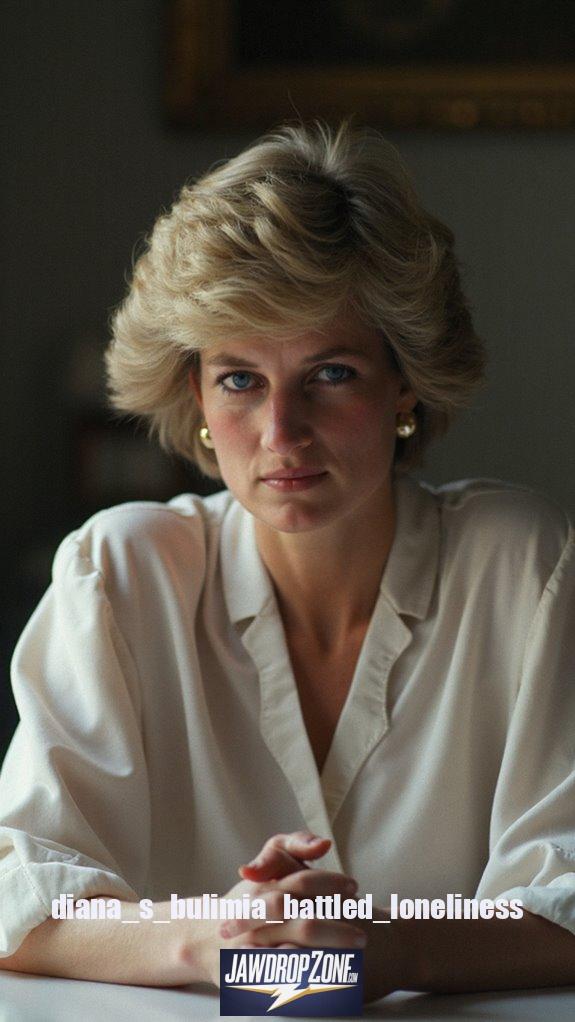
After her engagement to Prince Charles in 1981, Diana battled bulimia nervosa, a disorder that started with simple comments about her weight.
Bulimia triggers included immense pressures from royal life and feelings of loneliness in her marriage, which fueled her low self-esteem. As a coping mechanism, she turned to binging on sweets in palace kitchens for temporary comfort, followed by purging to ease the resulting distress. This cycle persisted for about a decade, starting in her early twenties.
Diana’s family noticed her struggles, and she eventually sought help from specialists in the late 1980s. Through palace tapes, she revealed these challenges, raising awareness and helping others feel less isolated in their own battles.
Her honesty highlighted bulimia’s role as a survival tool amid emotional turmoil. Moreover, Diana’s openness in the 1995 BBC interview significantly contributed to reducing the stigma associated with eating disorders.
Shocking Suicide Attempts and Self-Harm

In the secret tapes from 1991, Diana disclosed several shocking suicide attempts during her marriage. She described throwing herself down stairs while pregnant, as well as cutting her wrists and slashing her chest and thighs with a penknife.
These acts served as cries for help amid intense self harm triggers, like feeling dismissed and isolated. Diana’s mental health struggles, including deep depression and low self-esteem, fueled her desperation, and her fainting spells due to exhaustion further illustrated the physical toll of her emotional isolation.
These acts were cries for help amid triggers like isolation and dismissal, fueled by Diana’s deep depression and low self-esteem.
For instance, after Charles ignored her pleas, she acted out of overwhelming distress. It’s essential to understand these incidents highlight the need for empathy and support, preventing further harm in similar situations.
Recognizing early signs can promote safer environments for those facing mental health challenges.
Charles’s Affair With Camilla Parker Bowles
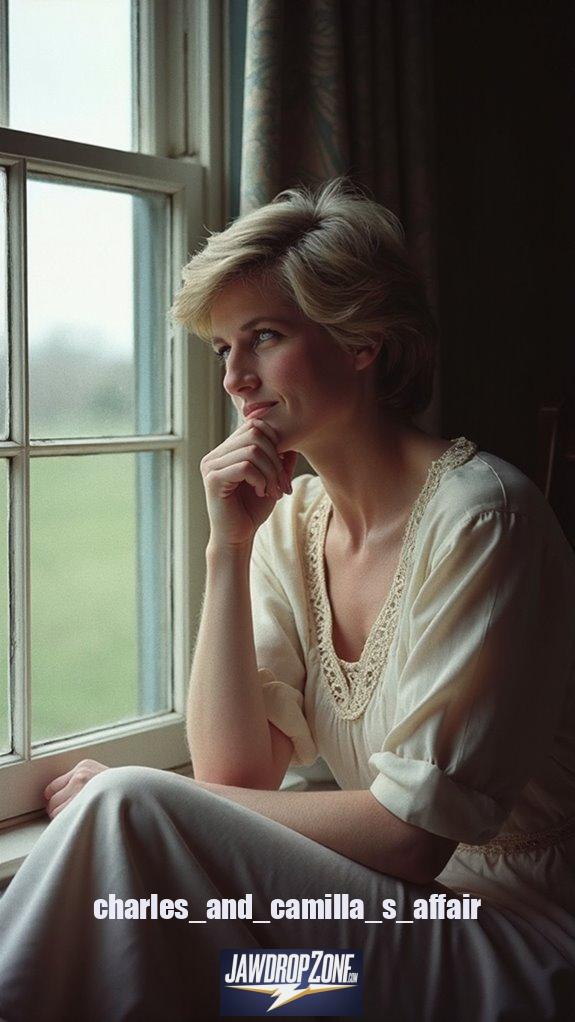
Although Diana’s tapes highlighted her own hardships, they also revealed Charles’s affair with Camilla Parker Bowles. These recordings exposed royal secrets, such as Charles’s intimate phone calls and gifts like a bracelet engraved with “G and F.” Diana described overhearing him declare his love to Camilla, which deeply affected her well-being. The affair’s details surfaced in the Camillagate tape, a leaked conversation that sparked a major public scandal. This recording confirmed Diana’s suspicions and damaged Charles’s reputation, showing how private matters turned into widespread embarrassment. Notably, the events surrounding this affair raised questions about royal assassination conspiracy plot as tensions within the monarchy were heightened during this tumultuous time. Officials later raised concerns about phone security, emphasizing the need for better protection in royal circles. Through these revelations, the tapes offered a glimpse into the personal struggles behind palace walls, fostering empathy for those involved. This incident, known as Camillagate, led to a significant change in public perception of Camilla.
The Loveless Marriage and Intimacy Issues
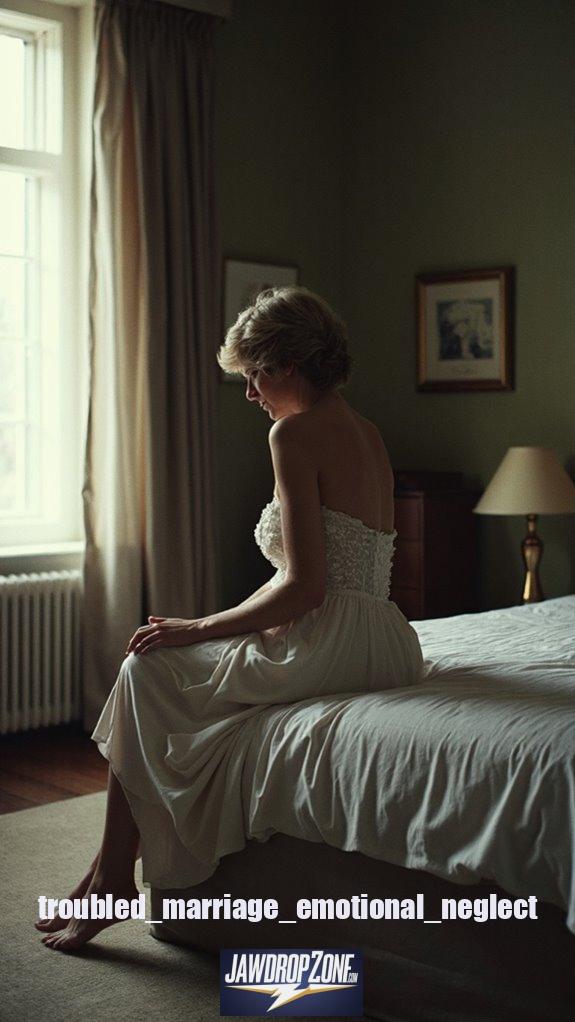
Diana’s tapes exposed a troubled marriage filled with intimacy struggles.
Diana and Charles met only 13 times before their wedding, fostering emotional neglect from the start. He blew hot and cold, calling daily then vanishing for weeks, which left her feeling isolated and unsupported.
Intimacy issues deepened as their sex life became odd and infrequent, occurring roughly once every three weeks. After Prince Harry’s birth in 1984, physical closeness ceased entirely, adding to Diana’s despair.
Charles avoided intimate contact and dismissed her distress, making her feel inadequate and alone. This emotional neglect created a cycle of loneliness, with Diana crying often due to the lack of warmth and attention. These marital struggles were deeply influenced by the unhappy childhood Diana endured from her parents’ divorce.
Seeking Help From the Queen
Amid her marital struggles, Diana sought guidance from Queen Elizabeth II, viewing her as a potential marital referee.
In her emotional turmoil, Diana approached the Queen directly, sobbing and calling her “the top lady” while pleading, “What do I do?” This heartfelt appeal revealed Diana’s severe distress over her marriage.
The Queen’s guidance, however, fell short; she simply stated, “I don’t know what you should do,” and some accounts note she added that Charles was hopeless.
Diana found this response unhelpful, marking the end of her pleas for support.
This exchange, from late 1992 to mid-1993, underscored the challenges of seeking advice within the royal family, offering a glimpse into Diana’s vulnerability and the Queen’s constraints.
Falling in Love With Someone Else
Princess Diana’s palace phone tapes revealed her emotional connections outside her marriage.
In these recordings, Diana’s love affair became an emotional escape from her isolating royal life, as she sought comfort amid personal struggles.
- Affectionate exchanges in Squidgygate tapes: Diana shared intimate calls with James Gilbey, who called her “Squidgy” repeatedly, showing their close bond during her moments of depression.
- Deep feelings for Barry Mannakee: She described falling deeply in love with her bodyguard, viewing him as her greatest love and even considering leaving everything for him.
- Impact on her well-being: These revelations highlighted Diana’s search for empathy, revealing how such connections helped her cope with marital sadness and mistreatment.
Questions and Answers
How Were the Tapes Secretly Recorded?
Princess Diana’s tapes were secretly recorded through clever methods that sparked ethical concerns. For Andrew Morton’s biography, a friend hid a recorder during palace interviews, capturing her stories on marriage and struggles.
In the Squidgygate incident, eavesdroppers used radio scanners to snag a private call, possibly involving direct taps. These approaches invaded privacy, highlighting risks of unauthorized surveillance that affect personal safety.
Experts note tampering signs, raising questions about trust and protection.
Who Leaked the Squidgygate Conversation?
Who leaked the Squidgygate conversation?
Around 60,000 callers tuned into a premium line, highlighting intense public reaction.
Cyril Reenan, an amateur radio enthusiast, sold the tape to The Sun newspaper, sparking leak motives tied to damaging Diana during her marital troubles.
Security services faced speculation, but investigations cleared them, emphasizing routine monitoring for safety.
This event stirred widespread debate, showing empathy for Diana’s privacy invasion.
What Happened to the Missing Tapes?
The missing tapes from Diana’s palace, including the lost recordings in a “box of secrets,” vanished after her 1997 death.
These items, allegedly containing sensitive audio and video, disappeared from Kensington Palace. The Peter Settelen tapes, for instance, turned up in a butler’s loft years later, leading to legal battles.
While some have been recovered and secured, others remain untraced, raising ongoing concerns about their safety and privacy. Authorities continue efforts to protect such historical materials.
Were Intelligence Agencies Involved in Leaks?
Intelligence agencies faced allegations of involvement in leaking Princess Diana’s phone tapes, with suspicions centering on MI5 and GCHQ. They denied any role, citing leak motivations like political embarrassment or security concerns.
For instance, Home Secretary Kenneth Clarke called such claims “wild,” while investigations pointed to amateur recordings.
Despite denials, public doubts persisted, highlighting potential risks to privacy and safety. Experts urged caution in such matters.
Did the Tapes Face Legal Challenges?
Like a hidden storm brewing over private words, the Squidgygate tapes faced significant legal implications and media scrutiny.
The Press Complaints Commission condemned their publication as a privacy invasion, though no lawsuits emerged from Diana.
Investigations probed the source, with officials denying involvement, sparking debates on press ethics and surveillance laws during that era.
This highlighted the need for stronger protections against intrusions.
References
- https://ca.news.yahoo.com/did-princess-diana-actually-record-105600318.html
- https://time.com/6226657/crown-charles-camilla-tampongate/
- https://www.cosmopolitan.com/uk/reports/a41801074/the-crown-diana-tapes/
- https://www.nzherald.co.nz/lifestyle/diana-tapes-latest-revelations-about-prince-charles-and-camillas-raunchy-relationship/SEOT57267OTJWZDM26IJV5P3GM/
- https://www.indiatoday.in/fyi/story/princess-diana-controversial-documentaries-revealed-royal-family-britain-1027262-2017-07-31
- https://www.marieclaire.com/celebrity/royals/newly-released-princess-diana-tapes/
- https://www.pbs.org/video/love-and-marriage-nfgi5S/
- https://en.wikipedia.org/wiki/Squidgygate
- https://www.pbs.org/wgbh/pages/frontline/shows/royals/etc/script.html
- https://www.nowtolove.com.au/royals/princess-diana-secrets-58343/
- https://www.dailymail.co.uk/femail/article-4590068/How-got-Diana-tapes-history.html
- https://www.gulftoday.ae/Lifestyle/2023/09/02/Tapes-reveal-Princess-Diana-saying-Charles-was-unhappy-when-Harry-was-born-because-he-wanted-a-girl
- https://www.ibtimes.co.uk/princess-diana-tapes-reveal-her-frustration-being-prince-charles-virgin-sacrificial-lamb-1625685
- https://people.com/royals/princess-diana-biographer-reveals-how-she-escaped-sense-being-prisoner/
- https://www.dailymail.co.uk/femail/article-4589960/How-Diana-secretly-recorded-hours-tapes.html
- https://www.dailymail.co.uk/news/article-4139834/Previously-unseen-letter-misunderstood-Princess-Diana.html
- https://www.youtube.com/watch?v=RtVj7nTqyt4&pp=0gcJCdgAo7VqN5tD
- https://www.independent.co.uk/news/uk/crime/tapes-recording-diana-s-marriage-confessions-may-be-shown-on-tv-7907473.html
- https://www.standard.co.uk/news/uk/diana-tapes-reveal-charles-told-princess-he-had-a-right-to-a-mistress-a3599576.html
- https://uk.news.yahoo.com/crown-season-5-did-diana-smuggle-tapes-from-kensington-palace-085629745.html