Tag: royal secrets

  • 5 Best Revelations From Diana’s Morton Interview Tapes

    5 Best Revelations From Diana’s Morton Interview Tapes

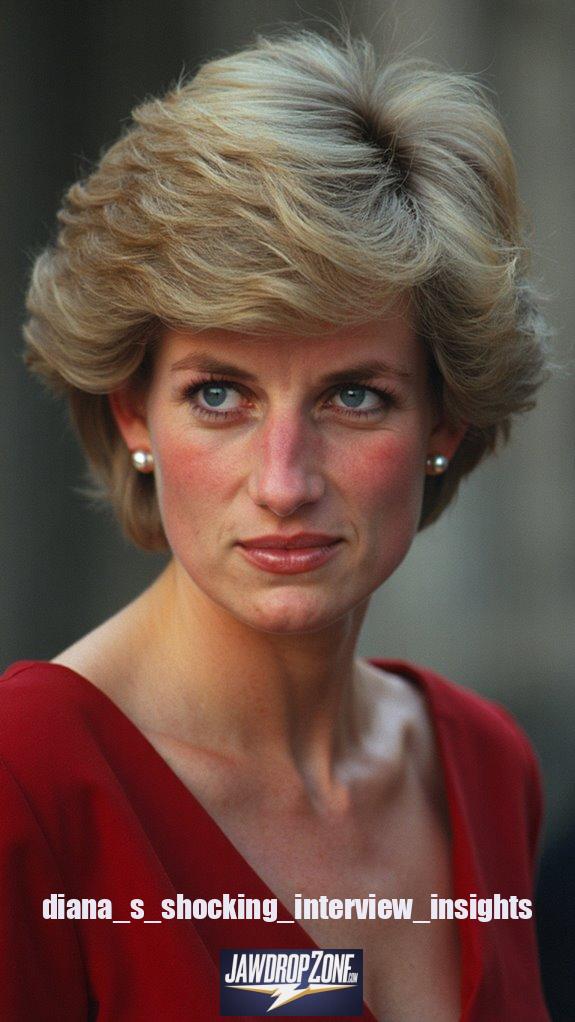
    Princess Diana’s Morton interview tapes exposed five key revelations about her life. First, she detailed her marital struggles and royal isolation, feeling trapped and lonely. Second, Prince Charles’s affair with Camilla caused deep emotional pain, especially after their 1989 confrontation. Third, Diana shared her battles with depression, bulimia, and suicide attempts amid media scrutiny. Fourth, the proxy process with James Colthurst allowed safe sharing of her story. Fifth, the tapes’ release shifted public views, sparking empathy and debates. These understandings offer a closer look at her experiences.

    Marital Struggles and Royal Isolation

    marital struggles and isolation

    Although Diana’s marriage to Prince Charles appeared perfect from afar, she faced deep marital struggles and royal isolation.

    Diana endured a marriage breakdown marked by emotional unhappiness and a sense of being trapped, as she revealed in her tapes. For instance, she shared feelings of profound loneliness within the royal family, where she received little emotional support during tough times. This isolation worsened her distress, as the family dynamics left her feeling disconnected despite her public role. Additionally, these struggles occurred amidst the scrutiny of the media, which often magnified her vulnerabilities and personal challenges.

    Diana’s revelations highlighted the gap between her visible life and hidden vulnerabilities, showing how a lack of emotional support fueled her challenges. Through these honest accounts, she sought to express her pain, emphasizing the need for understanding in such situations. Additionally, she disclosed developing bulimia shortly after her engagement due to critical comments about her weight, further illustrating the toll of her marital pressures.

    Her story offers lessons on seeking help safely, reminding us that everyone deserves empathy and care.

    Charles-Camilla Relationship
    complex love triangle revealed

    Diana’s tapes revealed the complicated affair between Prince Charles and Camilla, which rekindled around 1986. This affair mirrored the Incredible Escape of a resilient queen in its social and emotional complexities.

    In 1989, Diana confronted Camilla directly, highlighting the affair’s dynamics where Camilla downplayed her role as a long-time friend and confidante. This showed a complex love triangle that strained family ties.

    Public perception shifted as Charles admitted the relationship in 1994, claiming no infidelity until the marriage faltered. People reacted with disappointment, causing his approval ratings to plummet and raising doubts about his future as king.

    In 1994, Charles’s admission of his relationship shifted public perception, claiming no infidelity until the marriage weakened.

    These revelations exposed how affair dynamics influenced royal life, while media scrutiny increased empathy for Diana’s situation, though she handled it with quiet strength. Furthermore, the Tampongate tapes from 1989 provided additional evidence of their intimate conversations, intensifying public outrage.

    Mental Health and Emotional Toll
    royal isolation and struggles

    The tapes uncovered Princess Diana’s intense mental health battles, including deep unhappiness and isolation within the royal family.

    She shared stories of depression and bulimia, which weighed heavily on her daily life. Diana’s self worth struggles arose from constant royal expectations, making her feel undervalued and alone.

    For instance, she described emotional pain from media scrutiny and family distance, leading to several suicide attempts.

    These revelations highlight how the pressures of palace life eroded her confidence and well-being. Even after her marriage ended, ongoing loneliness persisted, fostering broader empathy for mental health issues.

    Through her words, Diana’s vulnerability reminds us that anyone can face such challenges, urging kindness and support in tough times. Additionally, the tapes reveal how emotional distance in her marriage, stemming from conflicts with Prince Charles, intensified her overall sense of isolation and despair.

    Proxy Interview Process
    proxy interview communication methods

    James Colthurst acted as a go-between for Princess Diana and author Andrew Morton, ensuring safe communication during the proxy interview process.

    Interview logistics involved six taped sessions in Diana’s Kensington Palace sitting room, where Colthurst delivered Morton’s questions and recorded her responses, allowing careful follow-ups after transcription. This method created necessary delays, giving everyone time to review details securely.

    Secrecy measures included encrypted scrambler devices for phone talks, preventing any eavesdropping, and Colthurst’s casual visitor guise to avoid royal staff suspicion.

    These steps protected Diana’s privacy, offering a shielded way to share her story without direct exposure, fostering a sense of control and safety in a vulnerable situation. Collaboration involved Diana testing Morton’s reporting skills to ensure the accuracy of her revelations.

    Post-Publication Impact
    royal privacy versus transparency debates

    After the tapes’ release, public views on Princess Diana and the royal family shifted dramatically, reshaping public perception and the media narrative.

    People saw Diana’s vulnerabilities more clearly, sparking empathy and debates on royal privacy, while media outlets adjusted their coverage to balance transparency with respect. The interview reached a global audience of 200 million, further intensifying international discussions on royal privacy.

    • The tapes revealed Diana’s unhappiness and bulimia, altering public perception of her marriage and fostering greater understanding.
    • They influenced media narratives in shows like The Crown highlighting her legacy and emotional struggles.
    • Public interest grew, fueling ethical discussions on privacy versus transparency in royal affairs.
    • The revelations increased scrutiny on Prince Charles, affecting family dynamics and leading to their separation announcement.
    • Media industries adopted stricter guidelines, prompted by the tapes’ controversies, to guarantee safer handling of sensitive stories.

    Questions and Answers

    Where Are the Original Tapes Stored?

    In the shadows of history’s vault, the original tapes’ location remains a mystery, hidden from public view.

    Experts note that no verified records confirm their storage security; Andrew Morton used transcripts via James Colthurst, not the tapes themselves.

    The Royal family hasn’t acknowledged possession, leaving researchers reliant on secondhand sources.

    This uncertainty sparks ethical debates, emphasizing the need for safe, authenticated preservation to honor Diana’s legacy.

    Did Diana Authorize the Transcripts?

    Diana authorized the transcripts from her interviews. She granted interview rights to Andrew Morton through her friend James Colthurst, while maintaining tape ownership.

    This guaranteed her stories, including personal struggles like bulimia, were shared with consent and respect. The process protected her privacy, allowing a genuine biography that honors her experiences.

    Details confirm her willing participation, emphasizing safety in disclosure.

    How Long Were the Interviews?

    The interviews lasted about seven hours total, spread across six sessions in 1991.

    This interview duration allowed Diana to share her experiences openly, creating a significant interview impact by informing Andrew Morton’s biography.

    For instance, it highlighted her marital struggles, fostering public empathy and deeper understanding of royal life, while respecting her privacy.

    Are Transcripts Available Online?

    Transcripts of Princess Diana’s interview tapes face limited accessibility online due to copyright and privacy issues.

    They’re not widely published, which protects sensitive details amid high public interest.

    Instead, people can find edited versions in Andrew Morton’s revised book or informal summaries from media outlets, offering perspectives without full exposure.

    This approach balances curiosity with respect for her story.

    What Happened to the Recordings?

    Like a hidden vault safeguarding secrets, the recordings of Princess Diana’s interviews remain intact.

    Andrew Morton actively preserves them, ensuring recording preservation through careful storage. He upholds media ethics by sharing only select portions publicly, like in documentaries, to honor Diana’s story without exploitation.

    This balanced approach keeps her legacy safe and informative for future generations.

    References

  • Why Diana Exposed The Royals Through Private Tapes

    Why Diana Exposed The Royals Through Private Tapes

    Princess Diana used private tapes to reclaim her narrative and expose the Royal Family’s hidden struggles. She revealed Prince Charles’s affair with Camilla, including gifts like cufflinks, and shared her battles with bulimia and mental health issues. These recordings challenged the official fairy-tale image, highlighting marital turmoil and personal pain. By documenting her experiences, she aimed for control and future protection. Further revelations await in the full account.

    Diana’s Personal Motivations for Recording

    reclaiming control through truth

    Diana recorded her tapes for several key reasons, driven by her need to reclaim control. She sought to share her personal truth, countering the Royal Family’s established perceptions that left her feeling unheard.

    For instance, she detailed specific incidents of isolation, using the recordings as a tool to shape her public image and preserve her lived experiences. This process offered emotional release, allowing her to vent unhappiness and depression in a stream of consciousness. In her tapes, she also discussed her experiences which paralleled Diana’s revelations during her landmark interview with the BBC, showcasing her struggle against the institution.

    Diana felt trapped, so the tapes became a safe outlet, helping her document struggles like bulimia without immediate judgment. Through this, she aimed for understanding, ensuring her voice created a historical record that validated her unseen pain. Her recordings resonate with the true crime factual slate unveiled by Hearst Networks, which highlights stories of personal and historical significance.

    Exposing the Affair and Marital Turmoil

    marital infidelity and heartbreak

    In the tapes she recorded for Andrew Morton’s book, Charles’s affair with Camilla Parker Bowles came to light. Diana shared affair details, such as discovering a bracelet Charles bought for Camilla before their wedding and seeing him wear her cufflinks during their honeymoon. Moreover, the royal wedding scandal revealed the extent of deception surrounding their union. She noted that the relationship resumed around 1986, adding to her distress. The emotional turmoil in their marriage was profound; Diana described her wedding day as the worst, feeling like a lamb to the slaughter. She recounted a calm yet intense confrontation with Camilla at a 1989 party, where she asserted her right to her husband amid ongoing unhappiness. Following the confrontation, Diana experienced emotional turmoil, including tears, but felt a sense of relief.

    In Diana’s tapes for Andrew Morton’s book, Charles’s affair with Camilla emerged, revealing a pre-wedding bracelet and honeymoon cufflinks.

    These revelations exposed the marital breakdown’s depth, shattering the royal facade and prompting public awareness. Charles later admitted his infidelity, though after the marriage’s collapse. This honest account helped Diana seek a safer path forward.

    Documenting Mental Health Challenges

    royal life mental struggles

    Amid the pressures of royal life, Princess Diana grappled with serious mental health issues that shaped her experiences. She documented these struggles through private tapes and public disclosures, which shifted public perception by fostering empathy and reducing stigma around mental health. Her story highlighted how royal expectations intensified personal challenges, offering a relatable glimpse into vulnerability. Additionally, Diana’s tapes exposed serious attempts to self-harm that marked her emotional turmoil during her marriage.

    • Bulimia Nervosa: Diana faced this eating disorder, linked to emotional distress from royal pressures.
    • Self-Injury: She experienced self-injury as a response to inner turmoil, seeking relief.
    • Low Self-Esteem: This fueled her mental health battles, affecting daily life and decisions.
    • Postnatal Depression: Diana dealt with this after childbirth, adding to her overall strain.
    • Marital Pressure: The stress of her marriage worsened her mental health, creating isolation.

    Challenging the Official Royal Story

    diana s hidden marital struggles

    Secret tapes recorded in 1991 at Kensington Palace uncovered the cracks in Princess Diana’s marriage to Prince Charles.

    These recordings exposed deep struggles and infidelities, directly challenging the official royal story of a perfect union. Diana’s candid reflections demanded royal accountability, revealing emotional pain and tensions that the monarchy had hidden from view.

    For instance, leaked calls showed her personal distress, including sensitive discussions about her life, which shifted public perception from an idealized fairy tale to a more human reality.

    This exposure highlighted the Royal Family’s vulnerabilities, encouraging people to question the controlled image and seek greater honesty in royal affairs. Furthermore, the tape’s first publication in The Sun on 23 August 1992 brought widespread media attention to these private revelations.

    Seeking Control and Future Protection

    control through personal narratives

    Princess Diana used her private recordings to gain control and protect her future amid royal pressures, employing control mechanisms to shape her narrative ownership. She turned personal tapes into tools for safety, countering the royal family’s influence while safeguarding her story from manipulation. These recordings have been featured in video content on news platforms, allowing for broader public engagement and preservation of her narrative.

    • Leverage through revelations: Recordings acted as control mechanisms, offering leverage against the establishment to prevent unfair treatment.
    • Securing narrative ownership: Diana claimed her story by sharing struggles, ensuring the public heard her truth directly.
    • Documenting for protection: Tapes created a record of events, serving as a shield in potential disputes and promoting personal safety.
    • Strategic vulnerability: She expressed emotions in a controlled way, maneuvering royal protocols to maintain boundaries.
    • Building empathy and legacy: Disclosures fostered public sympathy, helping secure her legacy and influence future relationships safely.

    Questions and Answers

    Who Was Andrew Morton?

    Andrew Morton was a British journalist and author, born in 1953 in Yorkshire.

    He began his career at the Daily Star, covering royals and celebrities.

    He’s best known for his 1992 book on Princess Diana, which drew from the Morton interview and explored Diana’s friendship.

    Through specific examples, like her mental health challenges, he offered a respectful, detailed look at her life, showing empathy for her struggles.

    His work remains informative and objective.

    Where Are the Tapes Stored Now?

    Where exactly are Diana’s private tapes stored now? The tapes, holding royal secrets, undergo secure tape storage in various protected archives.

    For example, Peter Settelen’s interviews reside in media vaults like Channel 4’s, ensuring safety. Andrew Morton’s materials sit with publishers, while Squidgygate tapes likely rest under legal or media control.

    This careful handling protects historical value and privacy, offering peace of mind. Details remain limited for security.

    How Many Tapes Exist Today?

    Today, several tapes linked to Princess Diana’s life remain in existence, including roughly seven hours of interview recordings and the Squidgygate tape.

    Diana’s motivations to share her personal struggles shaped these tapes, which had a lasting impact on the royals by exposing private issues. For instance, the Squidgygate leak caused media scrutiny, emphasizing privacy’s importance, as seen in later royal discussions.

    These recordings, now archived or referenced, serve as historical revelations.

    In the delicate domain of property disputes, the tapes faced intense legal battles over ownership.

    Peter Settelen, as copyright holder, clashed with Diana’s family, who claimed rights through her estate. These conflicts raised legal implications and privacy concerns, as seen in the 2004 ruling that returned six tapes to Settelen. He later sold them for documentaries, balancing historical value with family sensitivities.

    Courts addressed missing tapes, fueling debates on personal privacy.

    Were the Tapes Ever Leaked?

    Yes, the Squidgygate tapes, involving Princess Diana’s conversations, were leaked to the public.

    Diana’s motivations likely stemmed from her awareness of monitoring, aiming for personal truth.

    The Royal family reacted by ordering an internal investigation and boosting security measures. This scandal damaged their reputation but prompted safer communication practices, like enhanced surveillance, to prevent future risks.

    Details remain debated, yet it highlighted privacy needs.

    References

  • What Did Diana’s Tapes Reveal About The Queen?

    What Did Diana’s Tapes Reveal About The Queen?

    Diana’s tapes exposed the Queen’s emotional distance and limited support during Diana’s marital challenges. For instance, the Queen gave only brief advice on Charles’ affair, highlighting a lack of deep intervention. This revealed the monarchy’s struggles with personal empathy, painting it as somewhat detached. Such understandings offer a clearer view of royal dynamics and their broader effects.

    Diana’s Encounters With the Queen

    diana s royal challenges unfold

    Although Diana felt terrified of Queen Elizabeth II at first, she performed deep curtsies during their early meetings, masking Diana’s fears with formal grace. These initial encounters highlighted her emotional distress, as she navigated the royal world’s strict protocols. Diana kept a respectful distance, shaped by her marriage to the future king, which added pressure to every interaction. The Queen viewed her favorably then, seeing Diana as a suitable partner, which helped ease some tensions. Despite her inner turmoil, Diana’s composure showed strength, offering a sense of safety in uncertain times. Early exchanges focused on tradition, not personal woes, allowing Diana to build resilience amid her anxieties. Specific examples, like her deep bows, demonstrated her effort to adapt, fostering a controlled environment for all involved. This period emphasized empathy and mutual respect, prioritizing emotional well-being within the family’s dynamics.

    Diana often made unannounced visits to the Queen, which were initially tolerated by the monarch. These visits also revealed a significant shift in the royal family’s dynamics, showcasing how Diana’s presence influenced interactions within the royal circle.

    The Queen’s Advice on Marital Issues

    royal marriage communication struggles

    When Diana’s marriage faced challenges, she turned to Queen Elizabeth for guidance, driven by Diana’s Desperation. In taped conversations, Diana described sobbing as she approached the “top lady,” pleading, “What do I do?” The Queen’s Perspective, though brief, revealed her limited advice.

    Here’s a deeper look at this encounter:

    1. Diana’s Desperation grew as she sought emotional support, feeling isolated and overwhelmed by marital strife, which was exacerbated by the royal family’s historical expectations of duty over personal happiness.
    2. Queen’s Perspective acknowledged issues, stating, “I don’t know what you should do” and noting “Charles is hopeless,” showing awareness without solutions.
    3. The interaction left Diana unsatisfied, highlighting a perceived lack of royal intervention, which deepened her sense of isolation.

    This moment underscores the challenges in seeking help within the monarchy, offering lessons on communication and empathy for safer relationships. Furthermore, the queen expressed disapproval of Charles’ affair publicly, referring to Camilla as “wicked,” which highlighted her private frustrations in a more public context.

    Early Royal Family Views of Diana

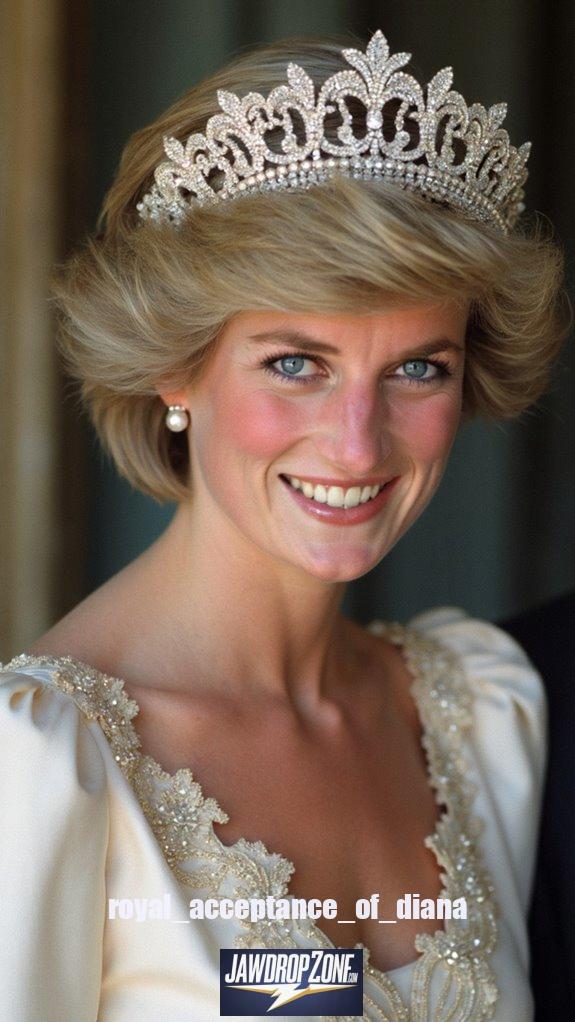
    royal acceptance of diana

    The Royal Family initially viewed Diana as a suitable partner for Prince Charles. Her aristocratic Spencer background met royal expectations, offering long-standing ties that impressed the Queen.

    During their first meeting, Charles found Diana “jolly, amusing, and attractive,” while she passed the Balmoral test with ease, earning the family’s approval. The Queen believed Diana would adapt well to palace life, seeing her as genuine and approachable.

    Public perception painted Diana as a perfect fit, boosting the monarchy’s image with her charm and youth. Despite initial concerns about her inexperience, she worked hard to meet expectations, appearing confident and enthusiastic.

    This early acceptance reflected the family’s hope for a seamless union, though Diana felt some isolation in those moments. The Queen’s approval after the Balmoral visit further solidified her position within the royal circle.

    Evolving Dynamics in the Palace

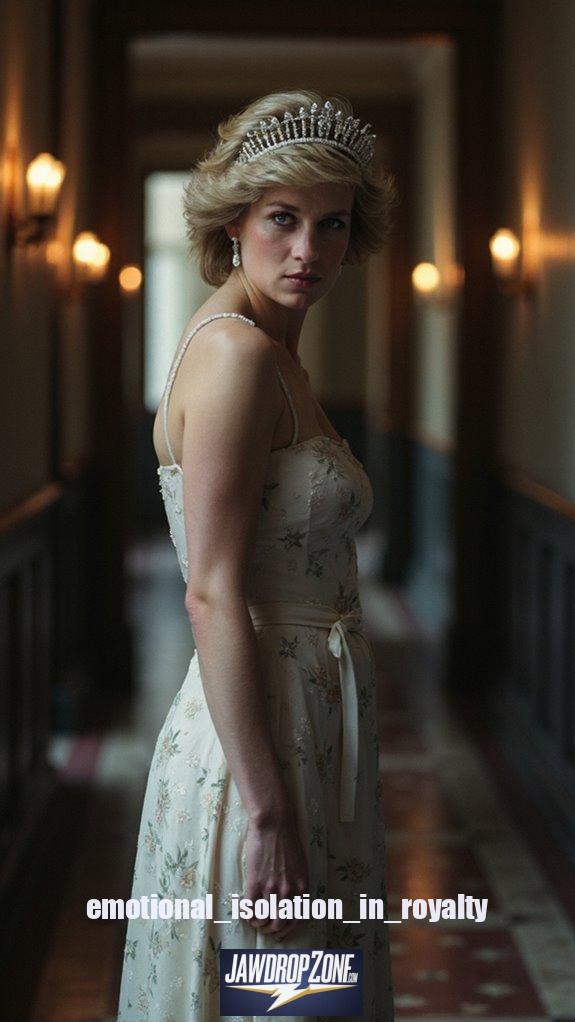
    emotional isolation in royalty

    As relationships within the palace shifted, the Queen and Diana’s bond grew strained due to rising palace tensions and emotional secrecy. Diana initially felt terrified and lonely, craving more guidance from the Queen, who preferred formal distance. The Queen’s discomfort with Diana’s emotional displays highlighted deeper challenges in royal life.

    To understand these changing dynamics, consider:

    1. The Queen’s avoidance of confrontations, as she dreaded Diana’s unscheduled visits, fostering a sense of emotional isolation.
    2. Diana’s profound loneliness, where she viewed royal protocols as barriers, yearning for support amid her struggles.
    3. Heightened emotional secrecy, with Diana fearing tapped phones and using secret tapes, which intensified palace tensions and bred mistrust.

    The Queen overestimated Diana’s ability to adapt to royal life, which further deepened the emotional divide between them. This shift underscores the need for empathy in family relationships, promoting a safer, more open environment within the monarchy.

    Impact of Diana’s Disclosures on the Monarchy

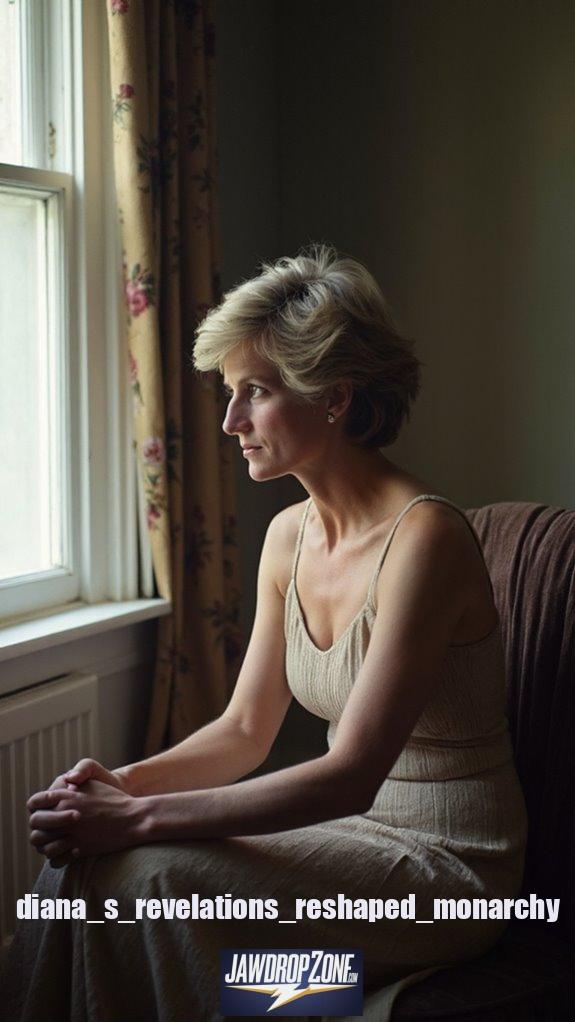
    diana s revelations reshaped monarchy

    Diana’s disclosures through tapes and interviews rocked the monarchy’s image, revealing personal struggles that shifted public views.

    These revelations exposed the monarchy’s fragility, as intimate details of marital issues and mental health challenges drew widespread public sympathy for Diana, portraying her as a victim of an uncaring system.

    For instance, the Queen’s initial silence after the Panorama interview heightened perceptions of indifference, fueling debates about the institution’s relevance.

    This scrutiny prompted internal changes, like urging a divorce, and pushed for greater openness among royals.

    Ultimately, Diana’s candidness influenced modern engagements, fostering empathy while highlighting the need for relatability in a changing world.

    Her story encouraged ongoing efforts to connect with the public safely and honestly. Furthermore, the Dyson Report in 2021 highlighted forged documents employed by the journalist, which further eroded trust in media portrayals of the royal family and amplified calls for accountability.

    Questions and Answers

    How Were Diana’s Tapes Recorded?

    Like a spy’s hidden message in a basket, Diana’s tape recording reflected her motivations to share her story of unhappiness.

    She actively recorded answers alone in Kensington Palace‘s sitting room, using a simple Sony recorder over six sessions.

    Dr. James Colthurst maintained tape confidentiality by biking the tapes to Andrew Morton, ensuring secrecy and safety in every step.

    This process protected her candid revelations effectively.

    What Did the Tapes Reveal About Charles’s Affairs?

    Diana’s revelations from the tapes exposed Charles’s infidelities, detailing overheard phone calls where he professed love to Camilla.

    She described confrontations, like discovering a bracelet he gave Camilla before their wedding.

    Charles justified his actions by referencing royal traditions, and the affair resumed after five years, as predicted.

    These facts confirmed ongoing betrayals, causing Diana distress, yet she handled it with quiet strength.

    Were the Tapes Edited Before Release?

    Various sources indicate that Diana’s tapes were indeed edited before release, raising tape authenticity and editing concerns.

    For example, Andrew Morton’s 1992 book featured altered transcripts, while the 2021 Dyson Report confirmed deceptive edits in the Bashir interview.

    Critics noted that such changes, affecting over 50% of key content, distorted facts and invaded privacy, emphasizing the need for careful handling to protect legacies.

    This guarantees respectful, accurate portrayals.

    How Did the Public React to the Tapes?

    The public reacted to Diana’s tapes with mixed feelings, as public sentiment shifted from initial skepticism to growing sympathy.

    Media coverage highlighted the revelations, sparking debates about the royal family’s support.

    For instance, bookstores boycotted the related book, while Diana’s friends corroborated her claims, fostering empathy for her struggles.

    This led to increased criticism of the monarchy’s handling, ultimately demanding more transparency.

    Did Diana Regret Sharing Her Tapes?

    Like a guiding light in turmoil, Diana’s choice to share her tapes sparked deep self-reflection and shifted public perception.

    She never regretted it, according to Andrew Morton, as it let her voice her struggles and highlight issues like bulimia.

    This openness, driven by fears of being silenced, empowered women to seek help and allowed her humanitarian spirit to thrive, despite initial anxiety.

    References

  • Princess Diana’s BBC Tapes: 5 Shocking Royal Revelations

    Princess Diana’s BBC Tapes: 5 Shocking Royal Revelations

    Princess Diana’s 1995 BBC Panorama interview revealed shocking truths about her royal life. She described her marriage to Charles as “crowded,” pointing to his affair with Camilla. Diana shared her struggles with bulimia and self-harm, feeling isolated at Kensington Palace. She doubted Charles’s ability to be King, citing his temperament. Ultimately, she dreamed of being the “Queen of Hearts” through humanitarian work. Stick around to uncover deeper understandings into her heartfelt story.

    The Crowded Marriage: Diana on Charles and Camilla

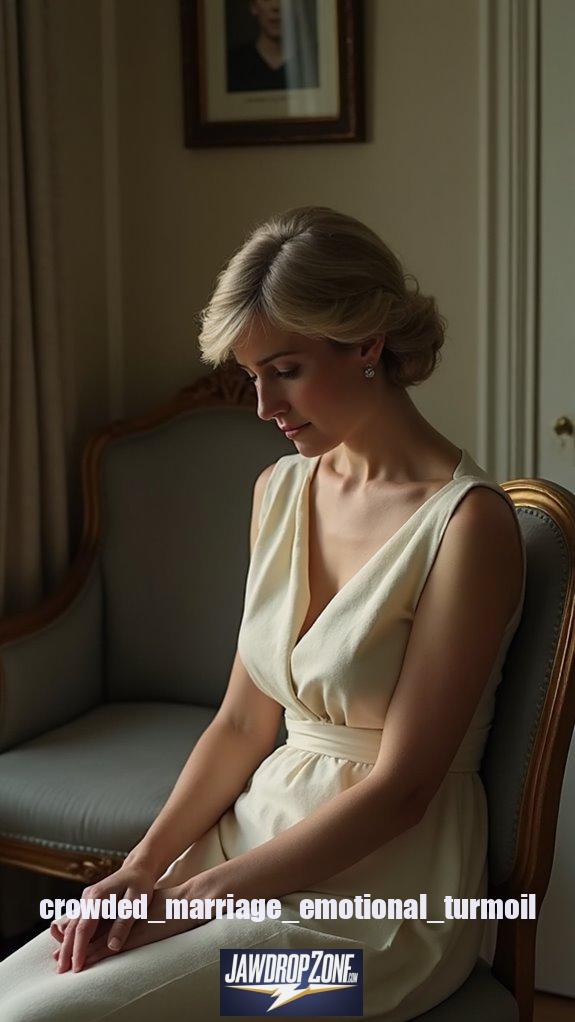
    crowded marriage emotional turmoil

    Let’s plunge into the challenging story of Princess Diana’s marriage to Prince Charles. Their union faced intense struggles, largely due to the affair dynamics with Camilla Parker Bowles.

    Diana, in her 1995 BBC Panorama interview, confirmed Charles’s relationship with Camilla, famously saying, “There were three of us in this marriage, so it was a bit crowded.” This revelation shocked many, exposing a painful truth she’d sensed through intuition and others’ concerns.

    The emotional turmoil Diana endured was clear as she described maintaining a public image while hiding deep distress. Charles’s refusal to end things with Camilla, even admitting his feelings publicly in 1994, left Diana feeling hopeless.

    She believed the royal family ignored the affair, adding to her isolation. The leaked intimate tapes of Charles and Camilla further humiliated her, confirming the betrayal. This interview, watched by over 20 million people, amplified the public’s sympathy for Diana’s plight watched by millions.

    This crowded marriage, strained by secrets, ultimately led to their inevitable divorce.

    Personal Struggles: Battling Bulimia and Self-Harm

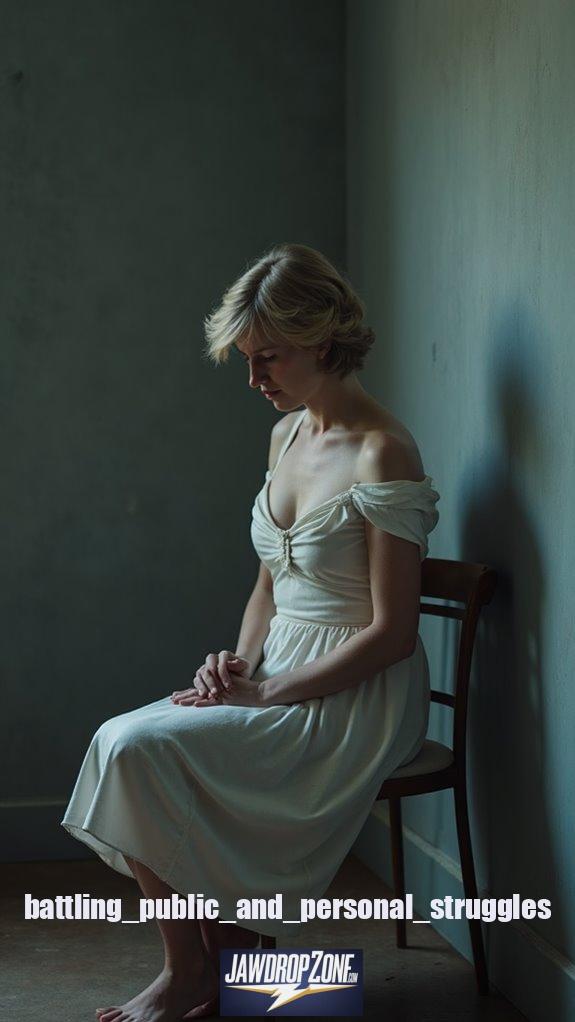
    battling public and personal struggles

    Turmoil marked Princess Diana’s personal life as she battled bulimia and self-harm.

    Her bulimia struggles began at 19, right after her engagement, triggered by a hurtful comment about her weight. The stress of public attention and personal challenges added to her pain. She described bulimia as a secret disease, a cycle of eating for comfort, then purging due to shame. This struggle mirrors the story of Queen’s unbelievable survival, highlighting how public figures often face deep personal battles hidden from the world.

    Diana saw it as a cry for help, an escape from deep emotional hurt. This disorder persisted for nearly a decade, reflecting the depth of her struggles persisted for decade.

    She also revealed self-harm coping methods, admitting to hurting her arms and legs. This was her way to express inner pain when words failed.

    In her 1995 BBC interview, she shared feeling ashamed but hoped to break the silence. Her honesty sparked the “Diana Effect,” inspiring others to seek support.

    Royal Isolation: Feeling Unwanted by the Palace

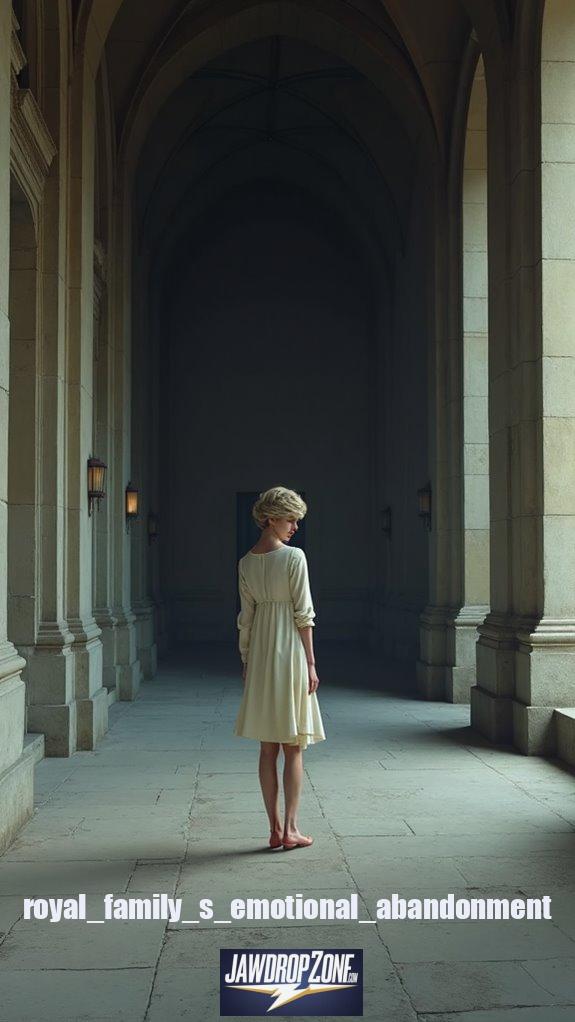
    royal family s emotional abandonment

    Princess Diana faced not only personal battles but also deep loneliness within the royal family. She often felt emotional abandonment, struggling with royal loneliness at Kensington Palace, which seemed isolating. In many ways, her sense of isolation mirrored that of historical figures like Queen Nzinga, who fought against overwhelming challenges.

    Diana shared how the family didn’t know how to support her post-partum depression after William’s birth. They labeled her “unstable,” making her hide her true feelings, as she felt compelled to perform.

    Moreover, Diana believed the royal establishment saw her as a “non-starter” for Queen, especially for leading with heart. After separating from Charles, she felt like a “problem,” facing a formidable foe in the family.

    Diana felt dismissed by the royal establishment as unfit for Queen, branded a “problem” after her separation from Charles, facing fierce opposition.

    The deceitful BBC interview, with forged documents, deepened her fear and isolation, as Prince William noted. Even seeking help from the Queen about her marriage brought no real support, leaving her feeling unheard. Her struggles with bulimia further compounded this sense of isolation, as she battled privately with self-harm behaviors.

    This royal loneliness, paired with emotional abandonment, painted a picture of a woman struggling alone amidst palace walls.

    Questioning the Crown: Doubts About Charles as King

    doubts about charles s kingship

    While Princess Diana faced deep loneliness within the royal family, she also harbored serious doubts about Charles’s ability to be King. In the 1995 BBC Panorama interview, watched by millions, she openly questioned if he could handle the role. She told friends and journalists, like Max Hastings, that Charles struggled with the demands of the “top job.” Diana felt the position of King would be suffocating, limiting his freedom.

    Moreover, Diana worried about Charles’s temperament, believing his mood swings could harm his leadership. She also doubted his emotional resilience, noting he lacked the empathy to connect with people. His introverted nature, she said, made him retreat under pressure. Additionally, she expressed concern that his personal struggles, including past relationships, might overshadow his ability to lead with clarity and focus past relationships. Diana’s candid remarks echoed sentiments from historical rebellions, where royal figures challenged their institutions to instigate change and reform.

    These concerns, shared publicly, unsettled many who valued the monarchy’s stability. Diana’s words, though honest, created tension, as they challenged the future of the crown. Her focus remained on protecting the institution’s integrity for future generations.

    A New Vision: Aspiring to Be the Queen of Hearts

    compassionate leadership and resilience

    Diana didn’t stop advocating after her separation from Prince Charles in 1992. She shared a bold vision during her 1995 BBC Panorama interview, watched by nearly 23 million people. When asked about becoming Queen of England, she firmly said no, instead aspiring to be the “Queen of Hearts” in people’s lives. She wanted to connect with ordinary folks, offering safety and hope through her actions.

    Her compassionate leadership shone as she focused on humanitarian causes, like supporting those with AIDS and leprosy. Diana took her sons, William and Harry, to see these projects, teaching them kindness. Her iconic interview revealed personal struggles, deepening public empathy for her cause. iconic interview Throughout history, many royal women have transformed their challenging circumstances into opportunities for leadership, echoing Diana’s resilience.

    She used her role for public service, drawing attention to vulnerable people needing help. Though the royal establishment saw her as different, her heart-led approach inspired many. Her strength in showing love, despite challenges, made her a comforting figure for millions seeking understanding.

    Diana’s Secret Recordings

    Although many knew Princess Diana through public appearances, few realized she made secret recordings. In 1991, she worked with biographer Andrew Morton, answering his questions on tapes. These were smuggled out of Kensington Palace by her friend, Dr. James Colthurst, often by bicycle.

    Diana’s motivations stemmed from a need to share her true story, revealing her unhappiness and struggles. She spoke about betrayal, bulimia, and her marriage’s breakdown in about seven hours of recordings.

    Her secret ambitions included being heard and understood by the public, beyond her royal role. These tapes, recorded privately with safety measures like phone scramblers, formed the basis of Morton’s 1992 book, “Diana: Her True Story.”

    Later, during her 1995 BBC Panorama interview, Diana confirmed her involvement with Morton. Despite controversies around the BBC interview’s methods, her recordings remain a protected glimpse into her personal challenges and heartfelt desires.

    Questions and Answers

    How Were the BBC Interview Tapes Obtained?

    The BBC interview tapes were obtained through dishonest methods by journalist Martin Bashir.

    He forged bank statements to trick Earl Spencer, Diana’s brother, into arranging the meeting. This raised serious concerns about tape authenticity and interview ethics, as trust was broken.

    Bashir exploited fears of spying, deceiving those involved. An investigation later confirmed these unethical actions, upsetting many who value honesty.

    The BBC apologized for failing to uphold fair standards.

    What Deceitful Methods Did Martin Bashir Use?

    Martin Bashir used deceptive tactics to gain trust and access for a major interview. He created fake bank statements, falsely showing payments to staff for spying, to mislead others.

    Bashir also fueled fears of surveillance, making up stories to deepen distrust. These actions violated media ethics, harming trust and safety.

    Why Did Bashir Leave the BBC?

    In a staggering turn of events, Bashir’s departure from the BBC shocked many in 2021.

    He left his role as Religion Editor, citing serious health issues, including COVID-19 complications and heart surgeries.

    Officially, he stepped down in May after informing the BBC in April.

    His exit raised questions about BBC accountability, especially with an investigation looming.

    For safety and clarity, it’s clear health was a key, undeniable factor.

    How Did Prince William React to the Controversy?

    Prince William reacted strongly to the controversy surrounding the BBC interview with his mother.

    He issued a statement expressing deep sadness over the media ethics failures, blaming the BBC for deceiving Diana.

    This, he said, worsened her fear and isolation, hurting the Royal Family.

    He criticized the use of fake documents to secure the interview, called it illegitimate, and demanded it never air again, seeking truth and fairness.

    Will the BBC Ever Air the Interview Again?

    The BBC has firmly decided they won’t air the 1995 Princess Diana interview again.

    In July 2022, Director-General Tim Davie announced this ban on future broadcasting, respecting Prince William’s wishes.

    They’ll only use short clips for specific journalistic needs, with strict approval.

    This protects viewers from misleading content, as public response has shown concern over past deceit.

    The decision, following the Dyson Inquiry, prioritizes trust and safety for everyone involved.

    References